School outdoor spaces have to work hard. From busy playgrounds and sports areas to pathways, entrances and outdoor learning environments, surfaces must withstand daily use while providing a safe, practical and welcoming environment for pupils and staff.
Choosing the right surfacing is an important part of school grounds design. Different areas have different requirements, whether that’s providing impact protection around playground equipment, creating accessible routes between buildings or developing colourful spaces that encourage active play.
Resin and rubber surfacing offer a range of versatile solutions, combining durability, low maintenance and design flexibility to meet the varied needs of schools, nurseries and other educational settings.
1. Different surfacing solutions for different school environments
Not all school surfacing is the same. Understanding the differences between resin bound, flexible rubber and EPDM wet pour systems helps schools select the most appropriate finish for each area.
EPDM wet pour playground surfacing
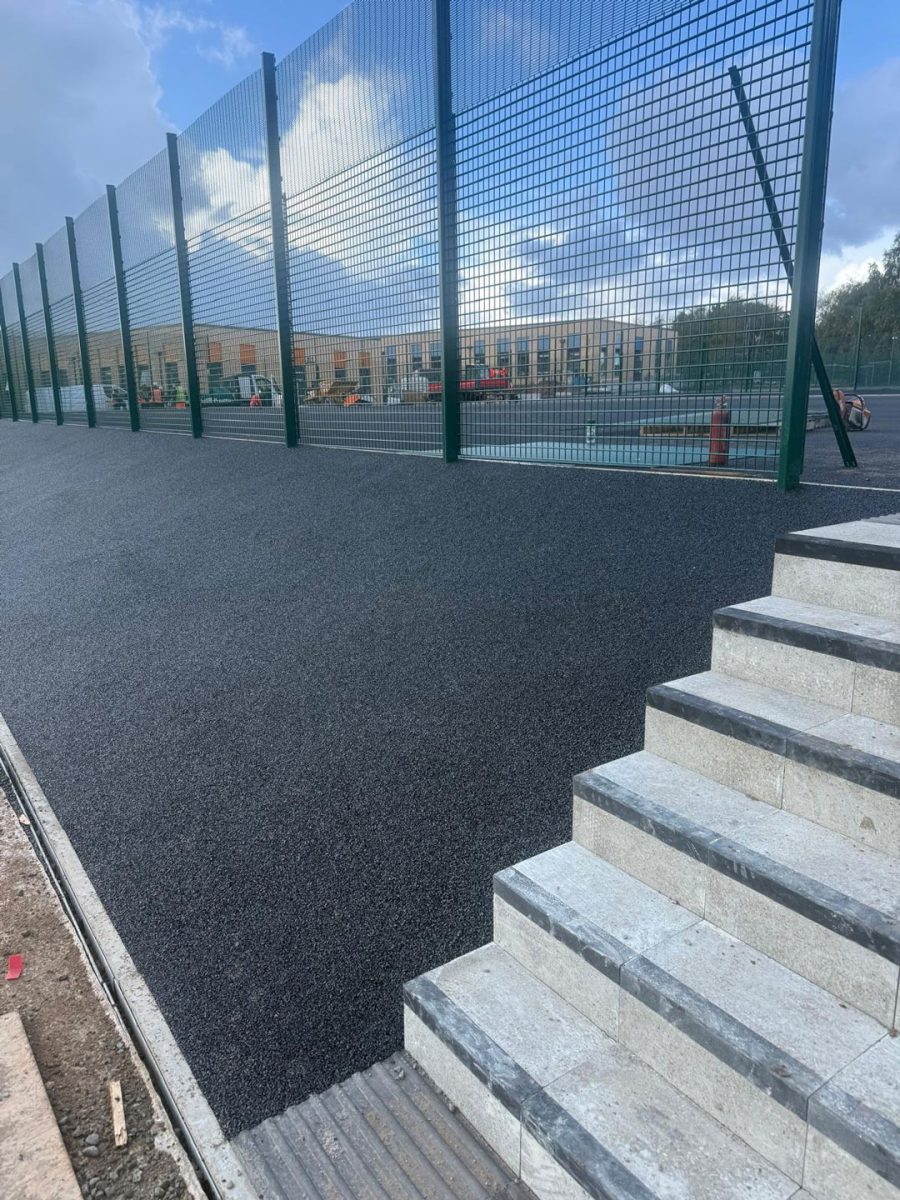
A flexible, impact-absorbing rubber surface commonly used around climbing frames, slides and other play equipment. Typically installed with an EPDM wearing layer over a shock-absorbing base, it can be specified to meet the critical fall height requirements of playground equipment.
Flexible rubber surfacing
A resilient, comfortable surface suitable for playgrounds, activity zones and outdoor recreational areas. Different rubber systems can offer varying levels of cushioning, flexibility and impact protection depending on their construction and specification.
Resin bound aggregate surfacing
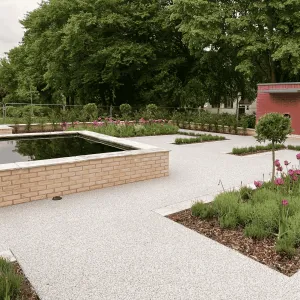
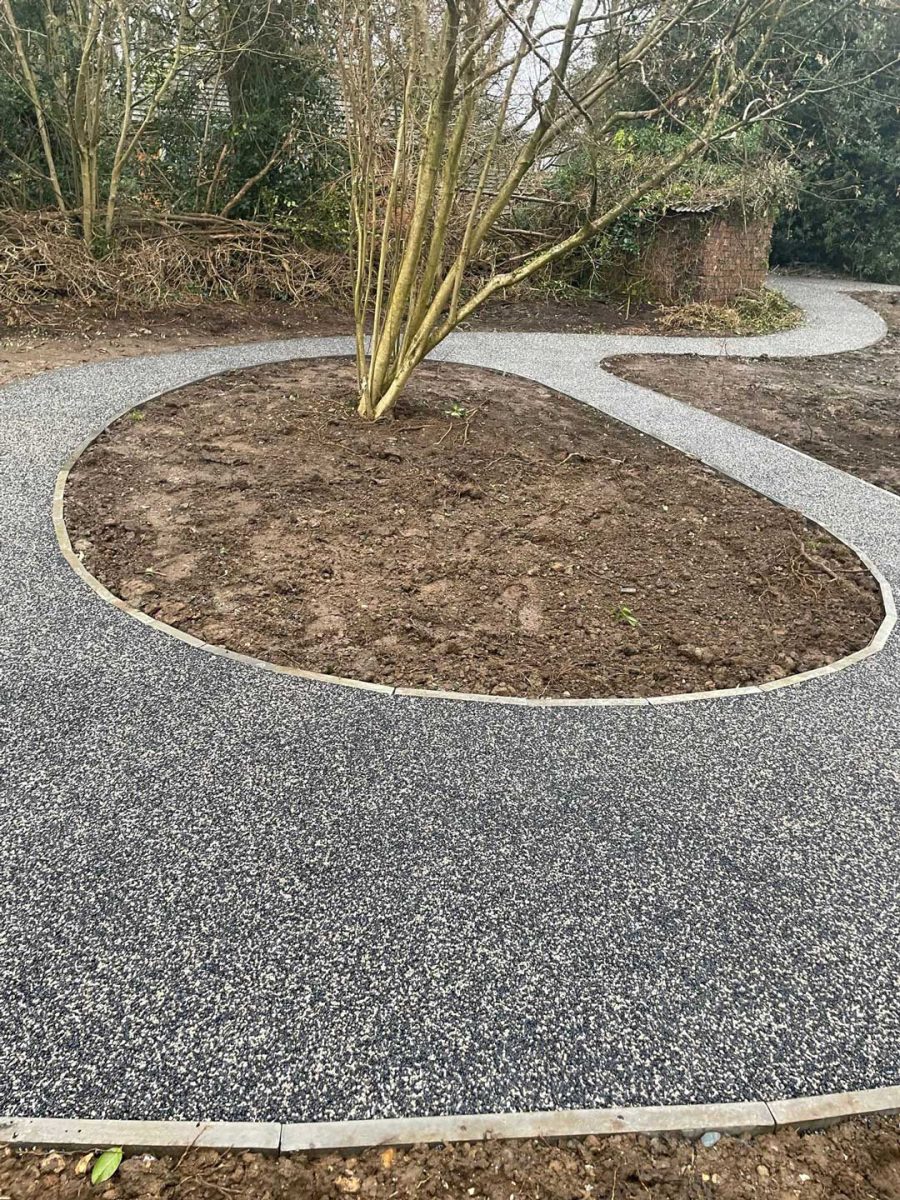
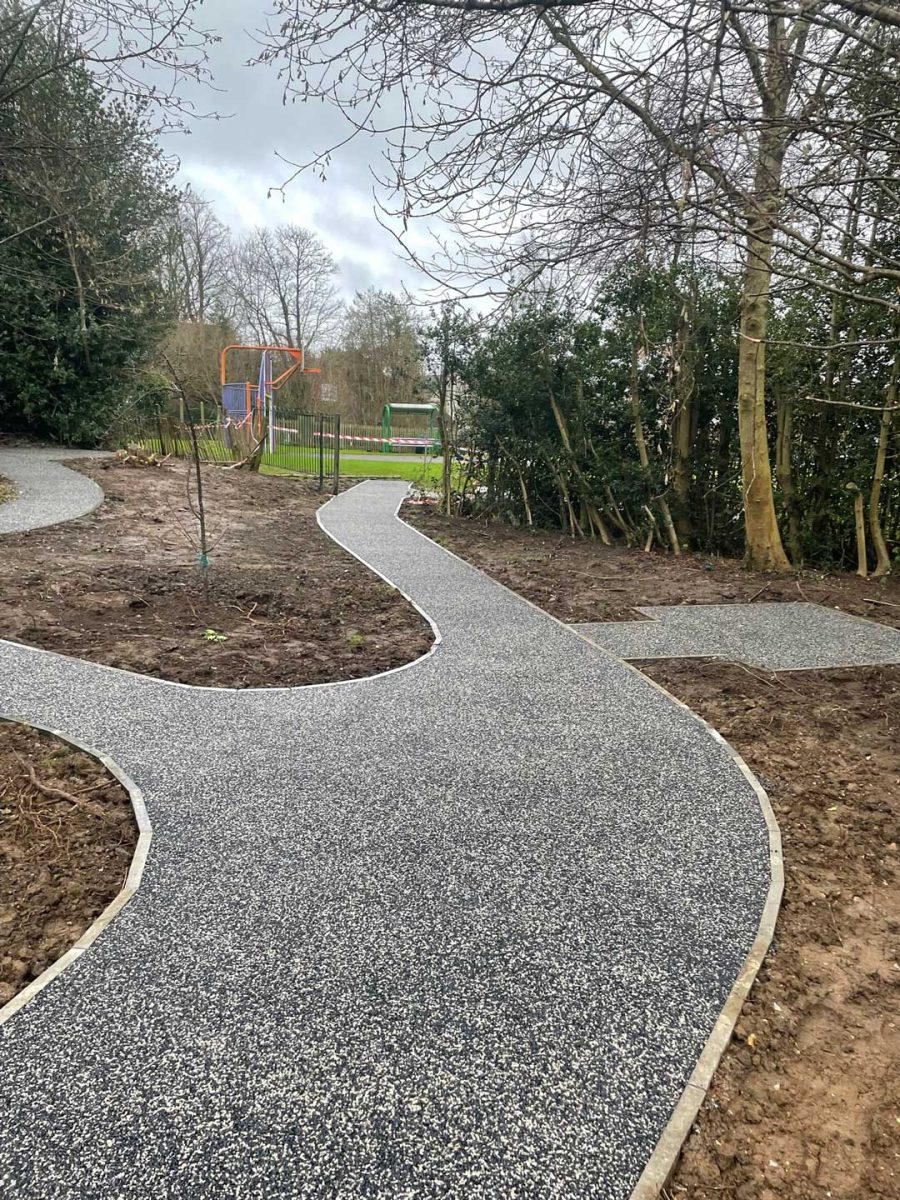
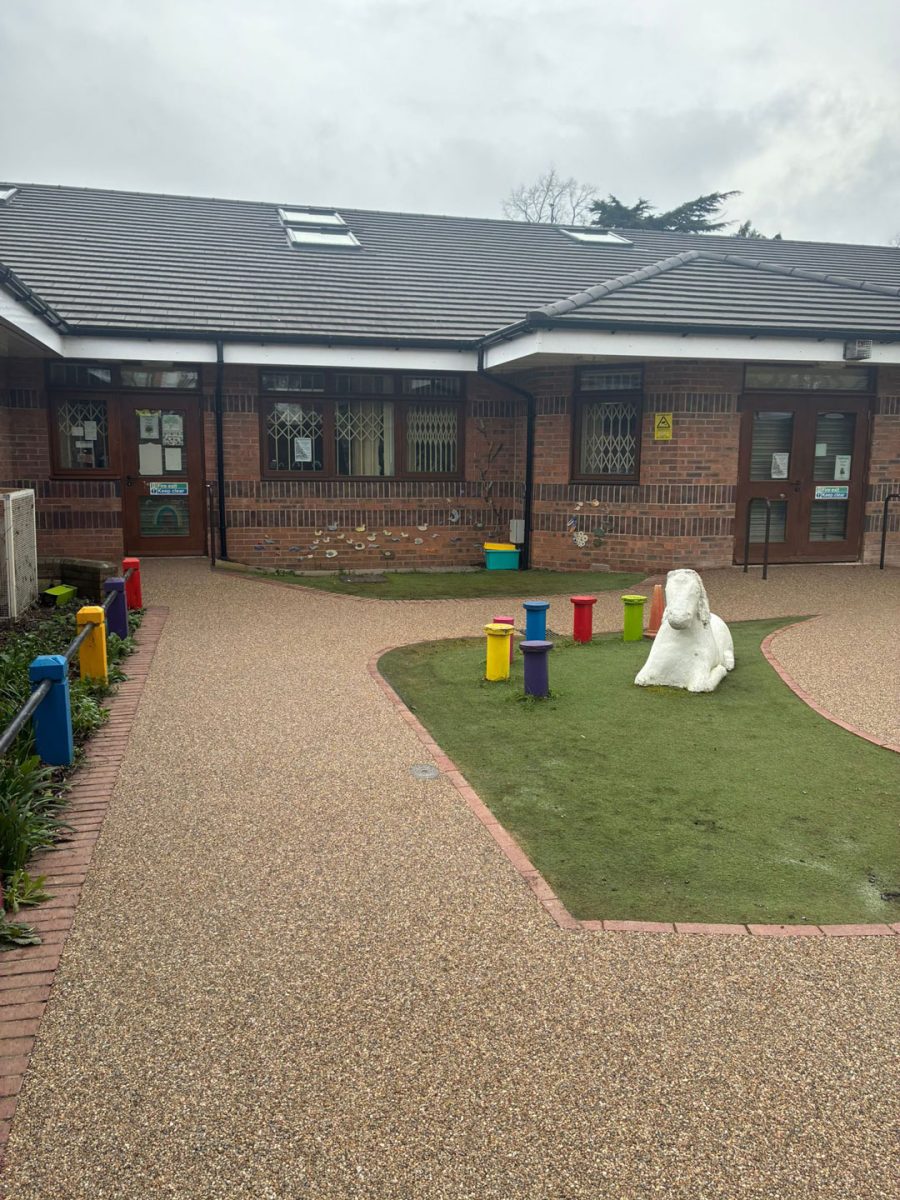
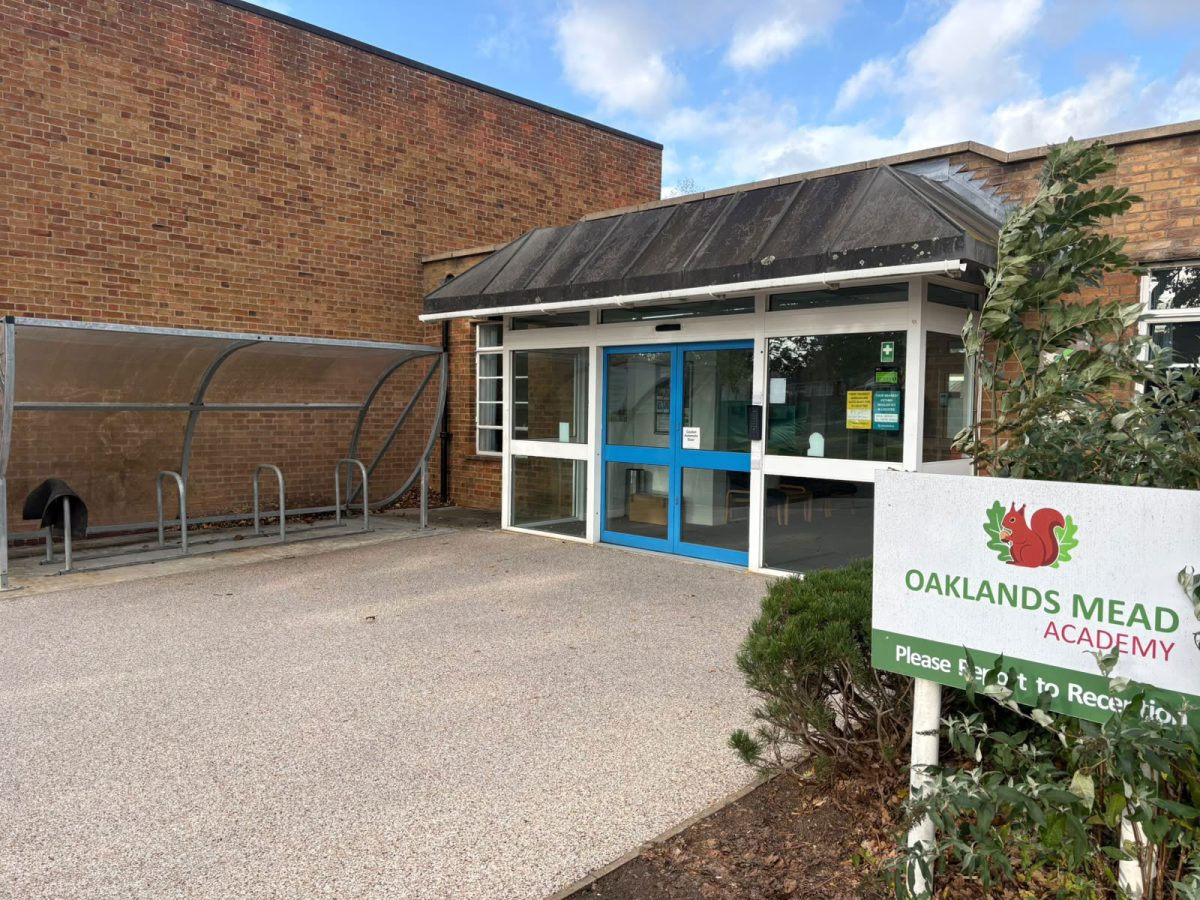
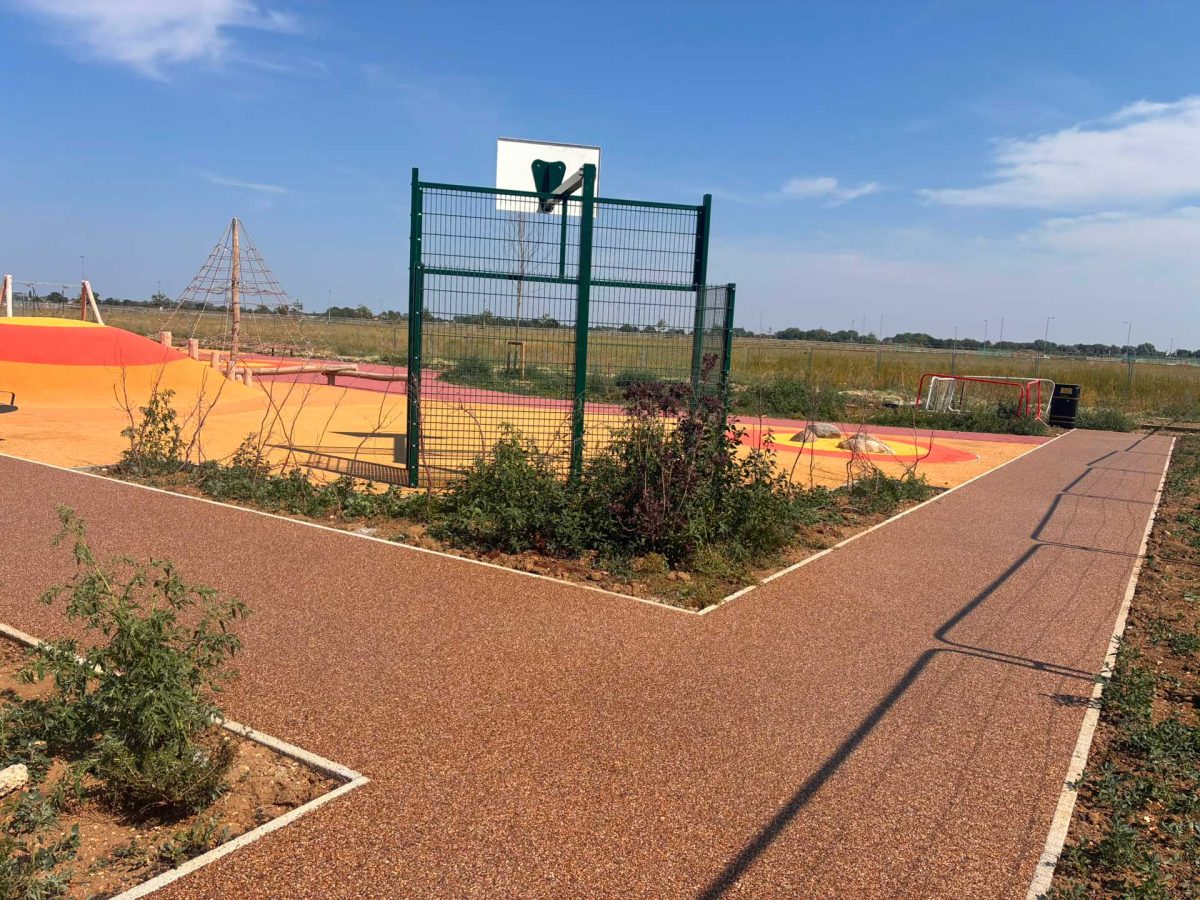
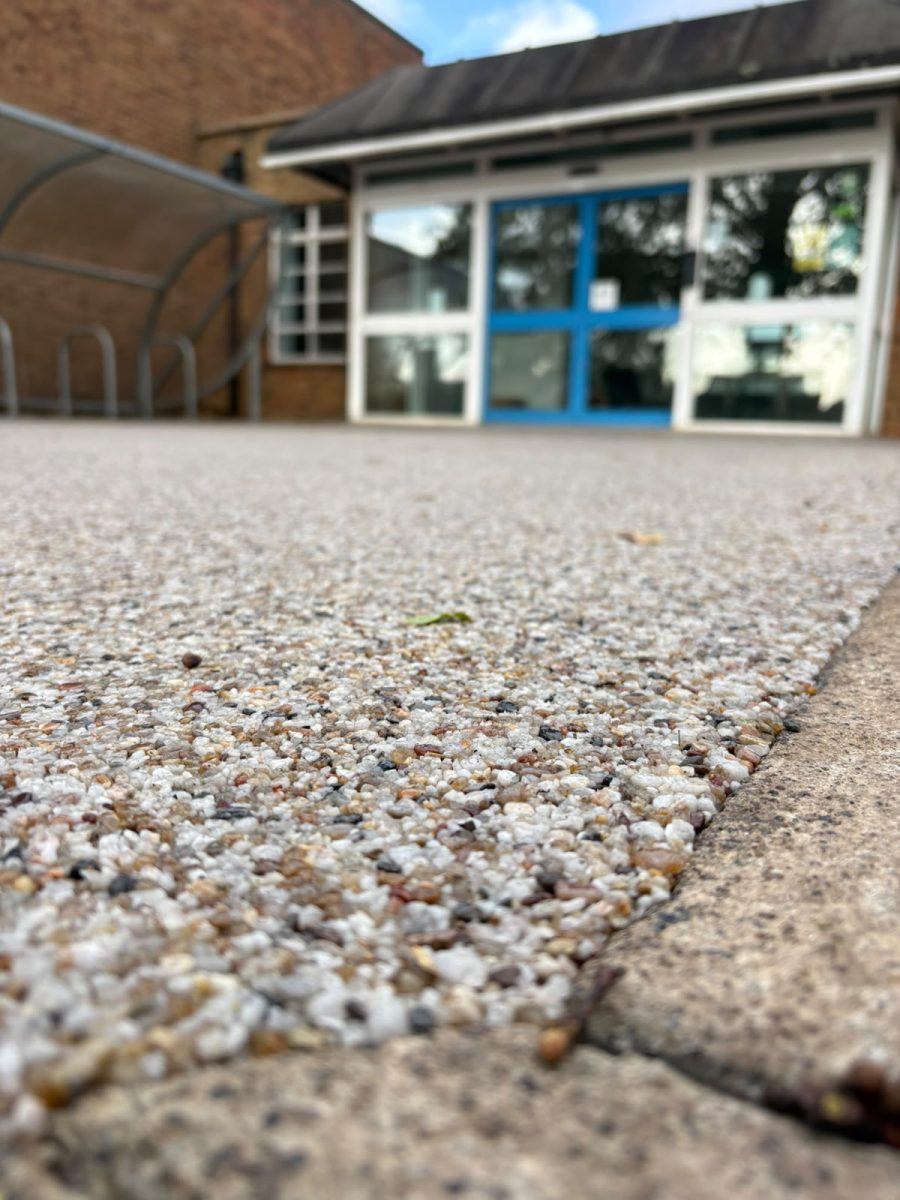
A smooth, hard-wearing decorative surface created by binding natural aggregates together with resin. Ideal for school entrances, pathways, courtyards and landscaped areas, it provides a stable finish without loose stones.
Each system offers different benefits, and many school projects can benefit from using a combination of surfaces across the site.
2. Improving playground safety with impact-absorbing surfaces
Safety is a primary consideration when designing school playgrounds, particularly around climbing equipment, slides and other elevated play structures.
EPDM wet pour and appropriately specified rubber safety surfacing can help reduce the severity of injuries caused by falls by absorbing some of the impact.
Unlike hard surfaces such as concrete or tarmac, impact-absorbing rubber systems incorporate cushioning properties that can be tailored to the requirements of the play equipment.
The thickness and construction of the surface must be selected according to the equipment’s critical fall height, with impact performance assessed against BS EN 1177.
Although no surface can eliminate the risk of injury, correctly specified and installed safety surfacing can contribute to a safer playground environment.
It’s important to distinguish these systems from conventional resin bound stone, which is designed for durability and accessibility rather than impact protection.
SAPCA+1
3. Encouraging active play and outdoor learning
School playgrounds are much more than places for children to spend their break times. They provide opportunities for physical activity, social interaction, exploration and outdoor learning.
One of the advantages of EPDM rubber surfacing is the flexibility it offers in terms of colour and design.
Bright colours, shapes, patterns and defined activity zones can be incorporated into the surface, helping schools create engaging environments for pupils of different ages.
For example, coloured surfacing can be used to distinguish between active play areas and quieter spaces, create pathways between activities or introduce educational markings such as numbers, shapes and games.
This makes rubber surfacing particularly well suited to primary schools, nurseries and early years settings, where outdoor environments play an important role in children’s development.
4. Creating more accessible and inclusive outdoor spaces
Accessibility is another important consideration when planning school grounds.
Uneven surfaces, loose gravel and poorly maintained pathways can create challenges for pupils, staff and visitors with mobility difficulties.
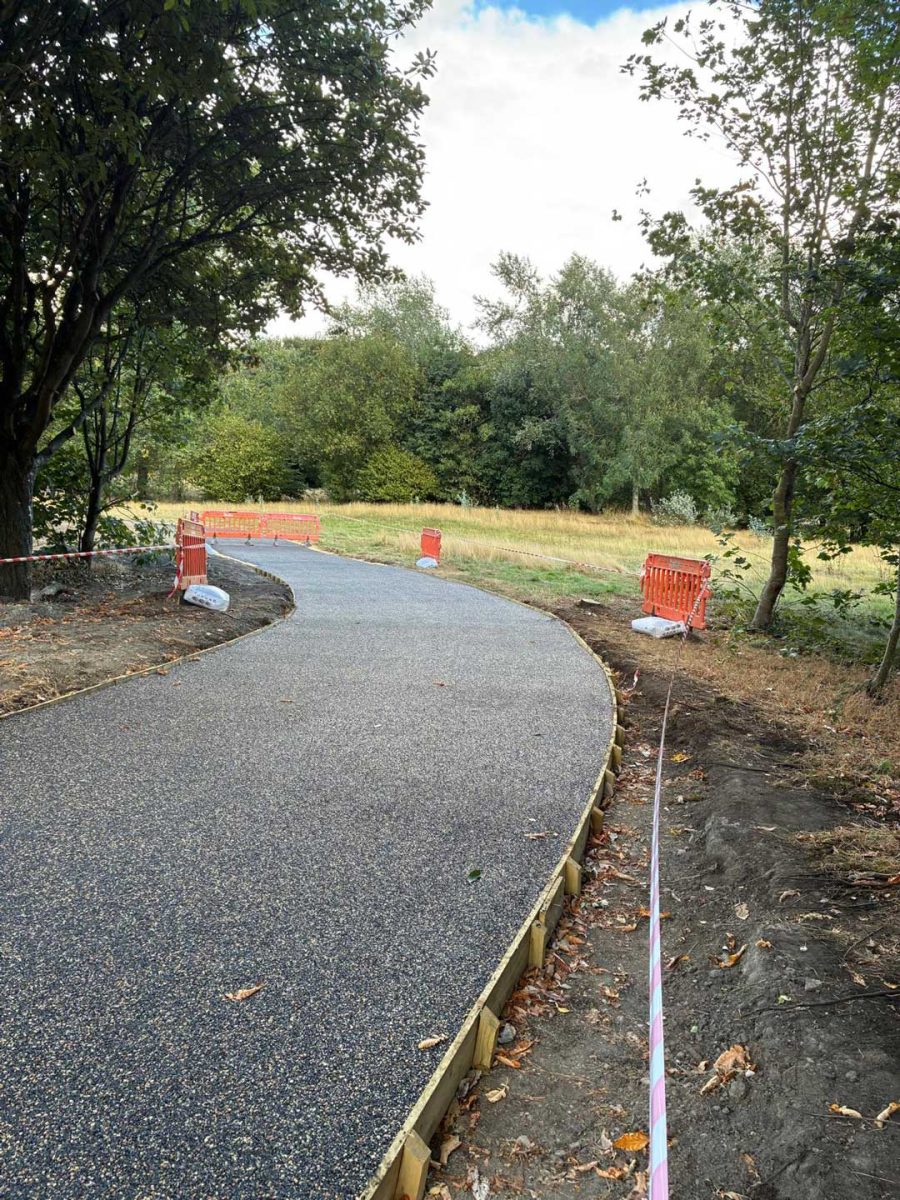
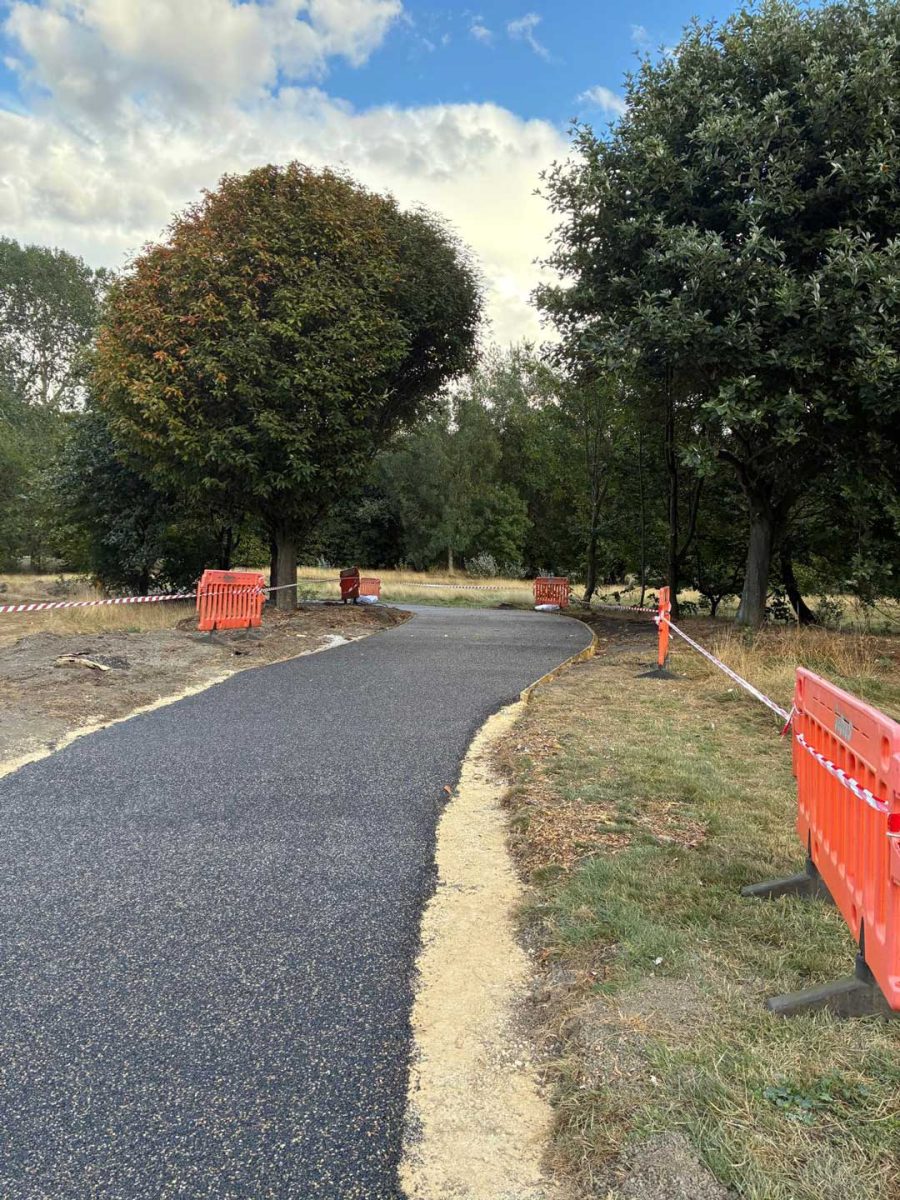
Resin bound surfacing provides a firm, stable and relatively smooth finish without loose aggregate, making it a practical option for pedestrian routes, entrances and accessible pathways.
Similarly, seamless EPDM and flexible rubber surfacing can provide comfortable, continuous surfaces for playgrounds and activity areas, supporting easier movement for wheelchair users and children with different mobility needs.
The suitability of any surface depends on its design, gradient, installation and ongoing condition, but choosing appropriate materials can help schools create outdoor spaces that are more inclusive and easier to navigate.
5. Durable surfaces designed for busy school environments
School grounds experience significant daily wear, particularly around entrances, playgrounds and frequently used routes between buildings.
Surfacing materials therefore need to withstand regular foot traffic, changing weather conditions and repeated use without requiring constant attention.
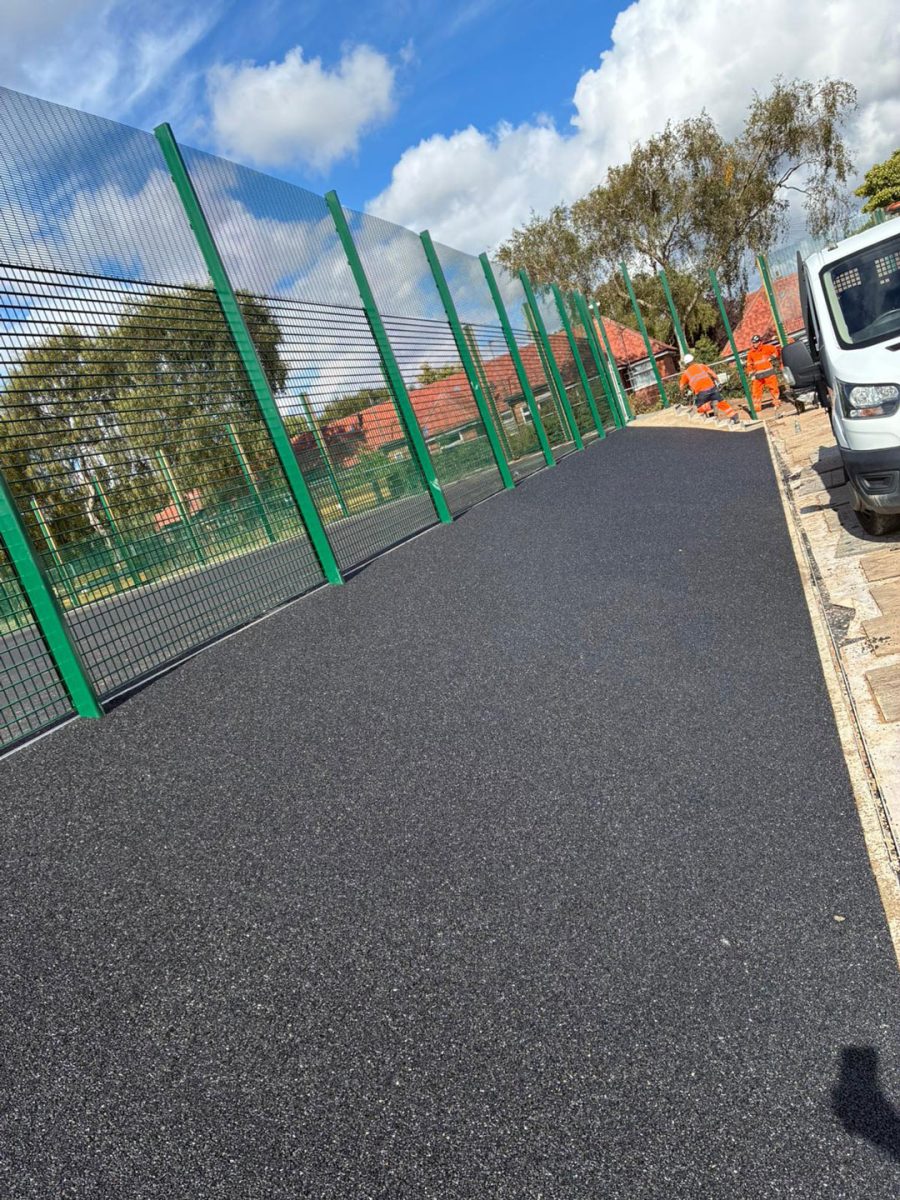
Resin bound aggregate provides a robust surface suitable for high-traffic pedestrian areas, while specialist rubber systems are designed to combine flexibility with resistance to everyday playground use.
Both offer long-term practical benefits when correctly specified, installed and maintained.
For schools managing limited maintenance budgets, choosing durable materials can help reduce the frequency of repairs and resurfacing work.
6. Reducing maintenance demands
Maintaining school grounds can be time-consuming, especially where surfaces are exposed to heavy footfall, fallen leaves, dirt and changing weather conditions.
One of the benefits of resin and rubber surfacing is that many systems require relatively straightforward routine maintenance.
Unlike loose gravel, resin bound surfaces do not require regular raking or redistribution of aggregate. Similarly, bound rubber playground surfaces avoid some of the displacement and replenishment associated with loose-fill play materials.
Regular sweeping, appropriate cleaning and periodic inspections can help preserve the appearance and performance of the surface.
For impact-absorbing playground systems, ongoing inspections are particularly important to identify wear, damage or deterioration that could affect safety performance.
7. Managing surface water and year-round usability
Wet weather is an unavoidable consideration for UK schools, where outdoor areas need to remain practical throughout much of the year.
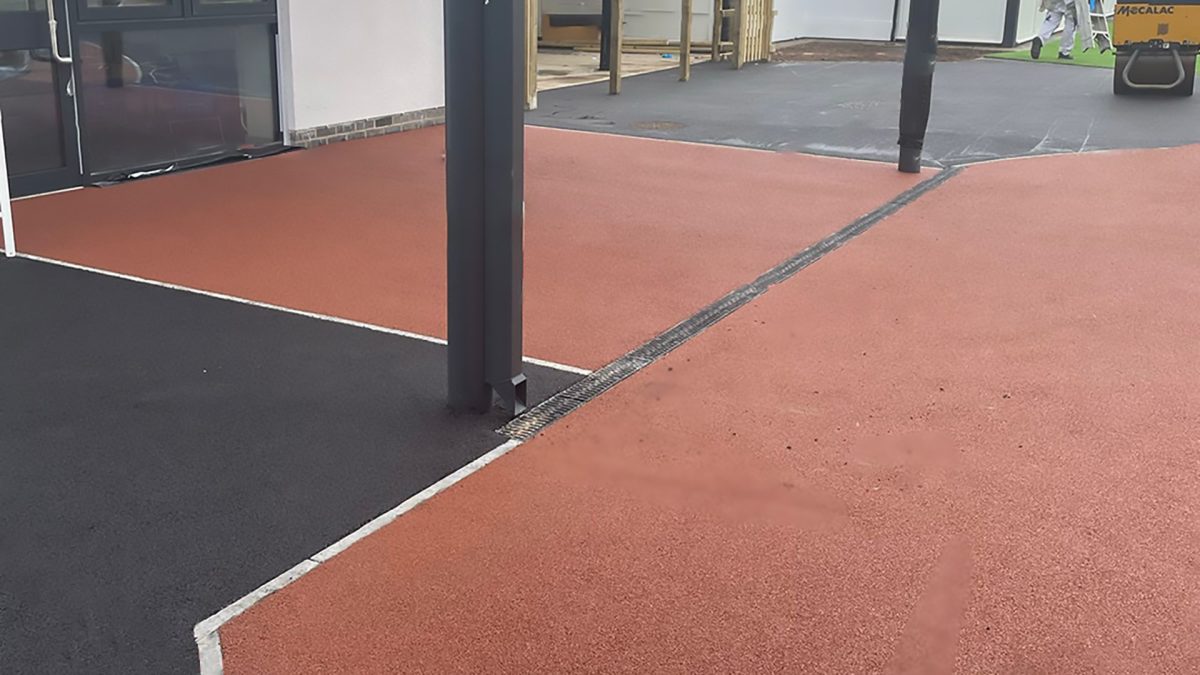
Many resin bound and rubber surfacing systems can be designed to allow water to pass through the surface, helping reduce standing water and improve drainage.
When combined with a suitable permeable sub-base and appropriate drainage design, resin bound surfacing can contribute to Sustainable Drainage Systems (SuDS), helping manage surface water more effectively.
Certain rubber playground systems can also offer water-permeable properties, supporting quicker drainage following rainfall.
However, permeability depends on the complete construction of the surface, not simply the material used for the top layer. Correct ground preparation and drainage provision are essential to achieving the intended performance.
8. Enhancing the appearance of school grounds
First impressions matter, and a well-maintained school environment can create a more welcoming experience for pupils, parents, staff and visitors.
Resin bound aggregate is available in a variety of natural colours and blends, allowing schools to select finishes that complement existing buildings and landscaping.
It can be particularly effective around main entrances, pathways, courtyards and outdoor learning spaces, where a more natural appearance may be preferred.
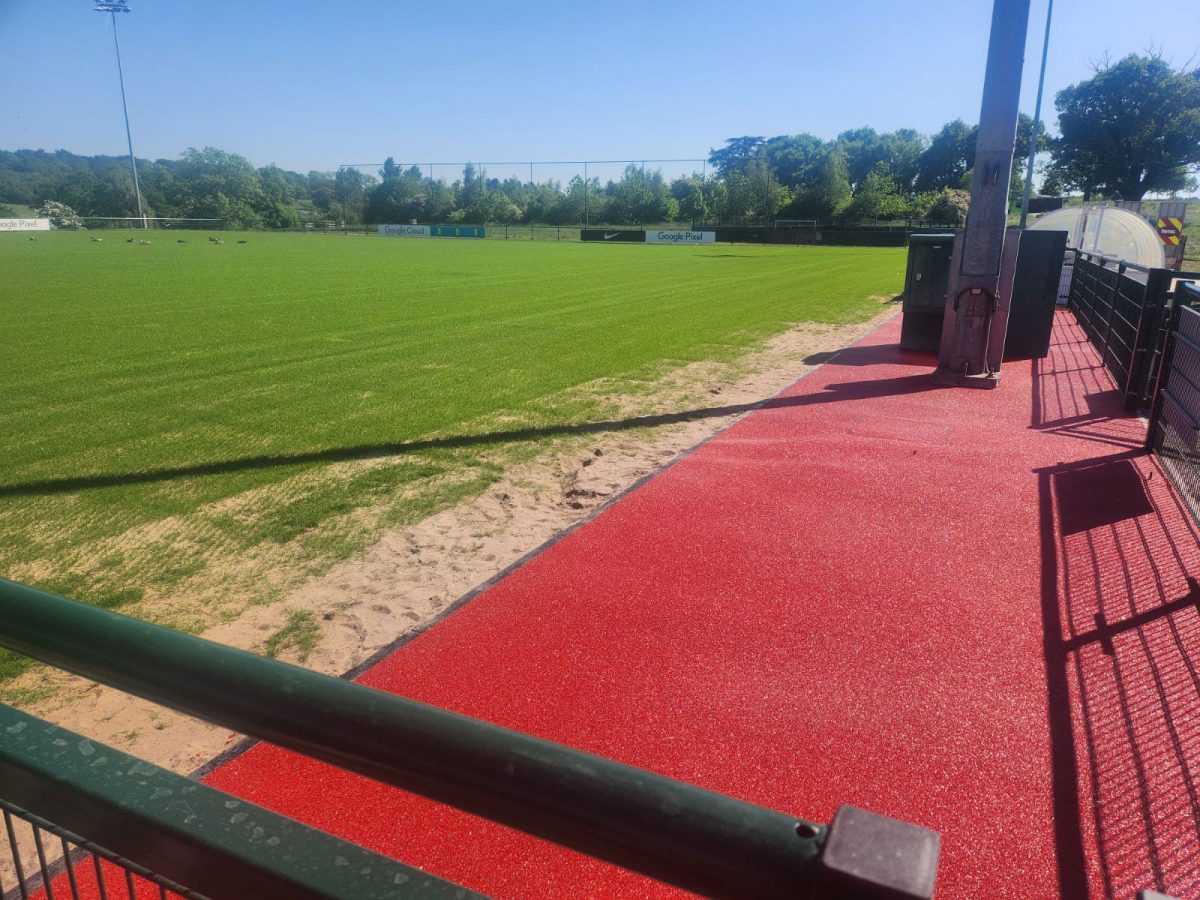
Rubber surfacing offers even greater scope for introducing colour and creative designs into playgrounds and recreational areas.
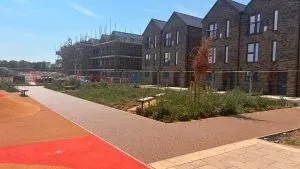
By combining different surfacing materials, schools can create a cohesive outdoor environment that balances practical requirements with visual appeal.
Choosing the right surfacing for your school
Every school has different requirements, and the most appropriate surfacing solution will depend on how each outdoor area is used.
School area Surfacing to consider
- Playgrounds with climbing equipment = Impact-absorbing EPDM wet pour
- Early years and nursery play areas = Flexible rubber or EPDM
- Outdoor activity and recreational zones = Flexible rubber surfacing
- Main entrances and pedestrian pathways = Resin bound aggregate
- Courtyards and landscaped spaces = Resin bound aggregate
- Colourful educational play zones = EPDM wet pour with designs and markings
Factors such as safety requirements, accessibility, drainage, expected usage and maintenance should all be considered before selecting a system.
Specialist surfacing solutions for schools
At HMS Decorative Surfacing, we understand the importance of creating outdoor environments that are practical, durable and suited to their intended use.
From resin bound pathways and entrance areas to flexible rubber and EPDM playground surfacing, different systems can help schools make better use of their outdoor spaces.
Whether you’re planning a new school development, upgrading an existing playground or improving access around a school site, choosing the right surface can make a lasting difference.
Planning a school surfacing project?
Contact HMS Decorative Surfacing to discuss your requirements and explore the options available for your school or educational facility.